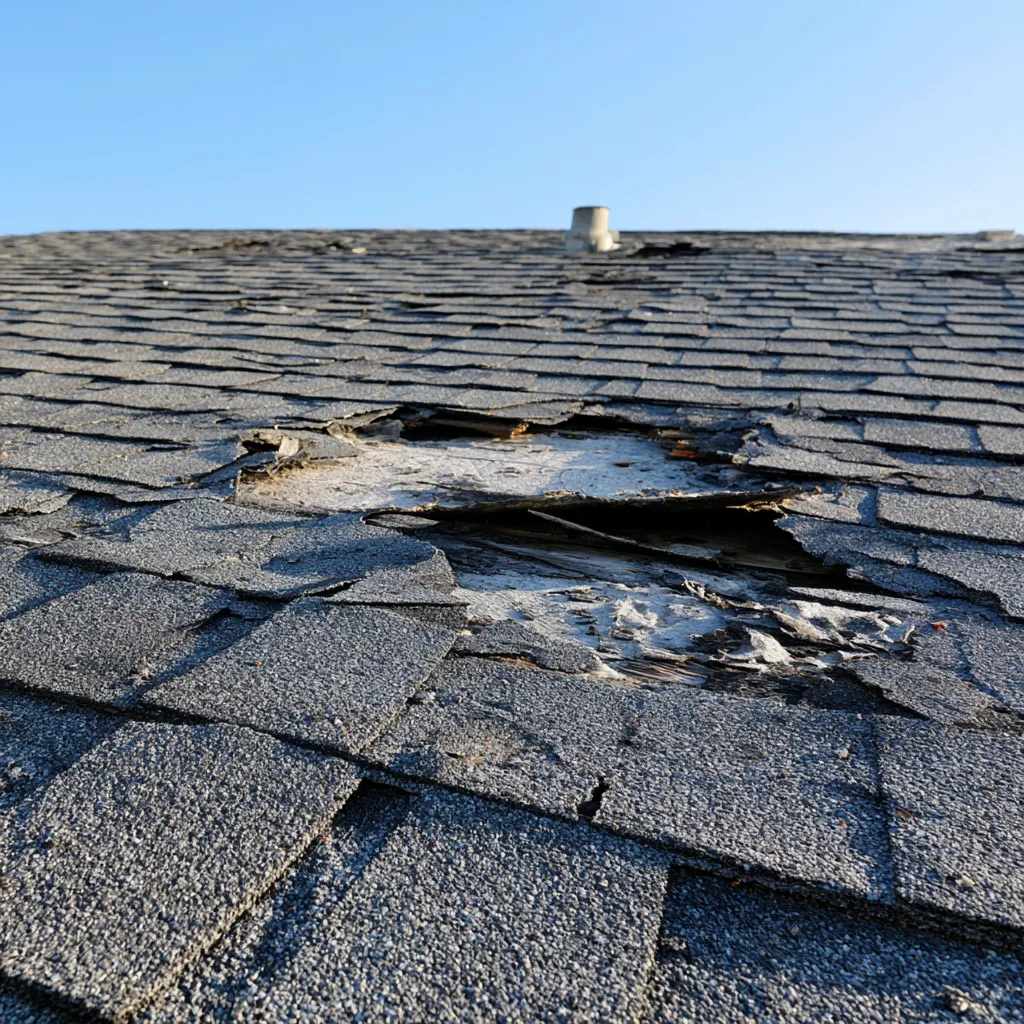
Roofers talk about hail so much that it gets hard to tell how much of it is real. The Denton County storm record settles that without anybody needing to be persuasive about it. Here is what four years of the record holds, which of those storms were logged at Little Elm itself, and what a stone of a given size does to a roof.
What the county record holds
Across the current four-year window, Denton County has logged 33 separate hail days and 168 hail reports. Of those reports, 139 were stones an inch across or larger. The largest on the record measured 5.90 inches and came down near Sanger. The strongest recorded wind gust in the same window was 96 mph.
Two things about those numbers are worth stating plainly. They cover the whole county, and Denton County is a big one. They're also counts of reported hail, which means they run low: a storm dropping stones over open ground at three in the morning with nobody awake to call it in never makes the list. Thirty-three days is a floor, not a ceiling.
A smaller set of those entries sits directly on Little Elm rather than somewhere else in the county. Here is what has been logged at the town itself, most recent first:
- September 5, 2025: a gust of 63 mph.
- May 26, 2025: a gust of 64 mph.
- March 29, 2025: hail of 1.00 inch.
- March 14, 2024: hail of 1.25 inches.
- June 11, 2023: hail between 1.75 and 2.00 inches, the largest logged at the town in this window.
- March 2, 2023: a straight-line wind gust of 81 mph.
What an inch of hail does
An inch across is the severe-hail threshold, and it is also roughly where functional damage to asphalt shingles commonly begins. That is not a coincidence of definitions. It is about energy. Below that size, hail tends to scuff. At and above it, hail starts fracturing what sits underneath.
Functional damage means the shingle has stopped protecting the roof or has started down that road. Two signs matter: granule loss heavy enough to expose the mat beneath, and bruising or fracture of the mat itself, which reads as a soft spot underfoot and often cannot be seen at all. A fractured mat holds water differently, and a roof can look untouched for two summers and then start leaking with no new storm to blame.
Cosmetic damage is a separate category, and knowing the difference before an adjuster uses the word is worth something. Scattered minor granule loss, or a dent that does not compromise the shingle, is cosmetic. Many policies exclude it specifically, and a roofer telling you every dent is a claim is not doing you a service.
Wind works differently and gets missed more often. A gust breaks the seal strip holding a tab down to the course beneath it. The tab lifts, and when it settles back it holds a crease across its width. That crease is the most-missed tell in the trade, because from a driveway the roof looks entirely normal. Once enough seal has broken, the next strong wind takes the shingle off.
What you can check from the ground
After a storm there is a genuinely useful amount you can establish without a ladder, and none of it involves getting on the roof. Look at what the hail hit that you can reach:
- Gutters, downspouts and fascia. Dents in soft metal are the clearest evidence that hail arrived with force.
- The outlet at the bottom of a downspout. Granules pooling there in quantity after a storm came off the roof.
- Metal vents, valley metal and flashing. Dings on these read the same way as dents in a gutter.
- The fins on the air-conditioning condenser, which bend at lower energy than shingles fracture.
- Window screens, garage doors and the mailbox, which between them record the direction the stones came from.
The order to do things in
What matters here is sequence more than speed. Document first, get it looked at second, decide about a claim third.
Photograph what you can see from the ground while it's still there, including the dented gutters and the granule pile, because that evidence washes away with the next rain. If water is actively coming into the house, your job is limiting the damage inside: move what is under it, catch what you can, photograph the interior too. Tarping and anything else on the roof surface is the roofer's lane, not yours.
Then a professional inspection, with the planes photographed as they're walked. Permanent repairs generally wait until an adjuster has seen the roof, so the useful thing to be holding at that point is a written, itemized scope of what the roof needs, dated against the storm that caused it.
Little Elm Roofing Co keeps the county's storm dates on hand for exactly this reason, because the first useful question after damage is usually which storm the roof was standing under. If one of the dates above lines up with your house, get the damage documented and take the decision from there. The claim stays yours throughout, and how that process runs is set out separately.