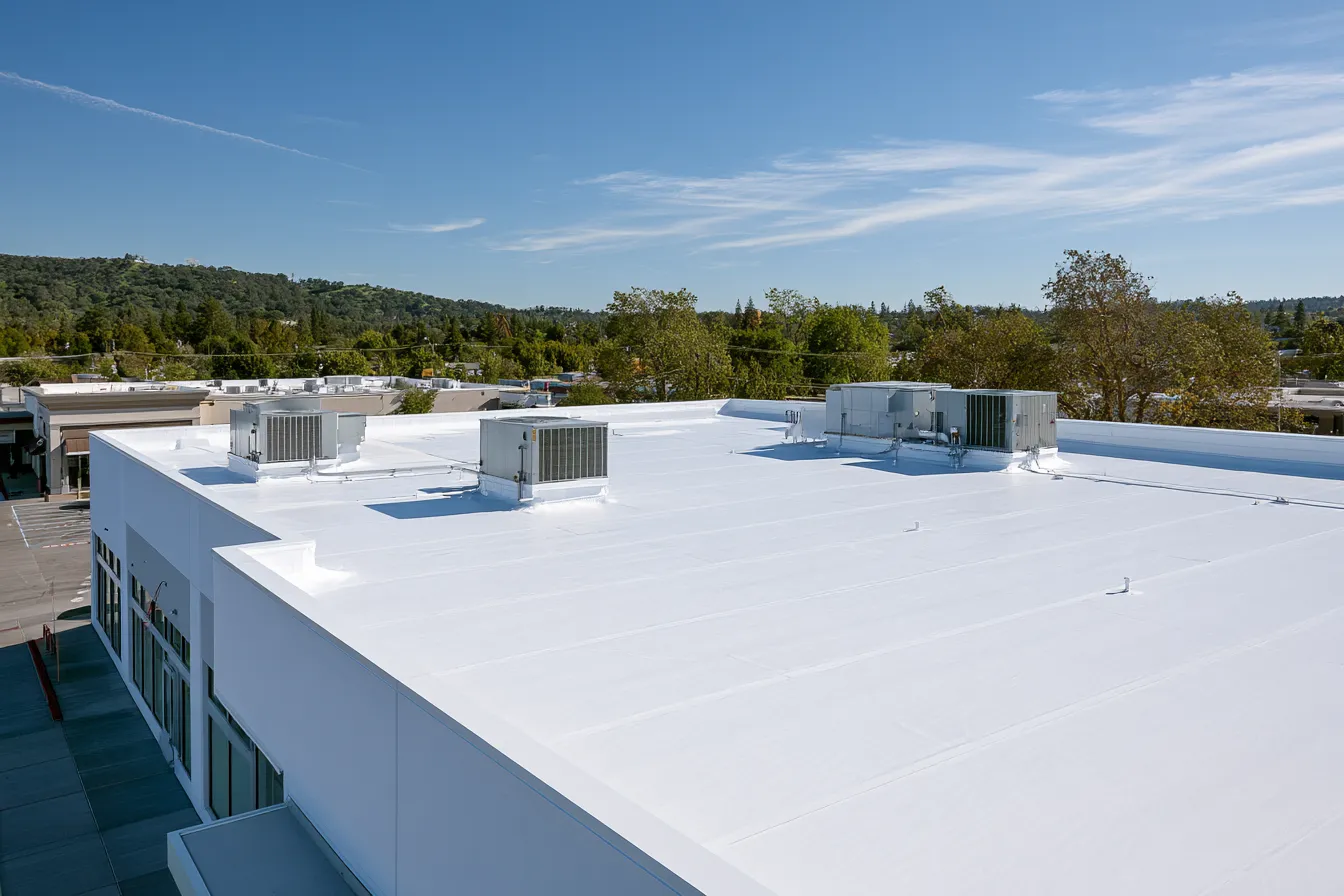
TPO Roofing in Little Elm, TX
TPO roofing is right for most low-slope buildings here and wrong for a few, and Little Elm Roofing Co will tell you which yours is.
One flexible white sheet, seams heat-welded into a continuous surface. Right for some low-slope roofs and wrong for others.
Roofing you can plan around
What a TPO roof job includes
TPO is billed by the square foot of finished roof, and what moves that number is how much comes off first, how many penetrations need detailing by hand, and which membrane thickness the building's traffic and exposure call for. Here is what the work covers.
Deck and moisture check
The roof is tested for trapped water and the deck checked for soft spots.
Tear-off or recover
Tear off or go over, decided by the moisture test.
Insulation and attachment
Rigid insulation laid and fastened or adhered, tapered where water needs help to drains.
Membrane thickness
Sheets come in 45, 60 and 80 mil. Thicker resists punctures for longer.
Heat-welded seams
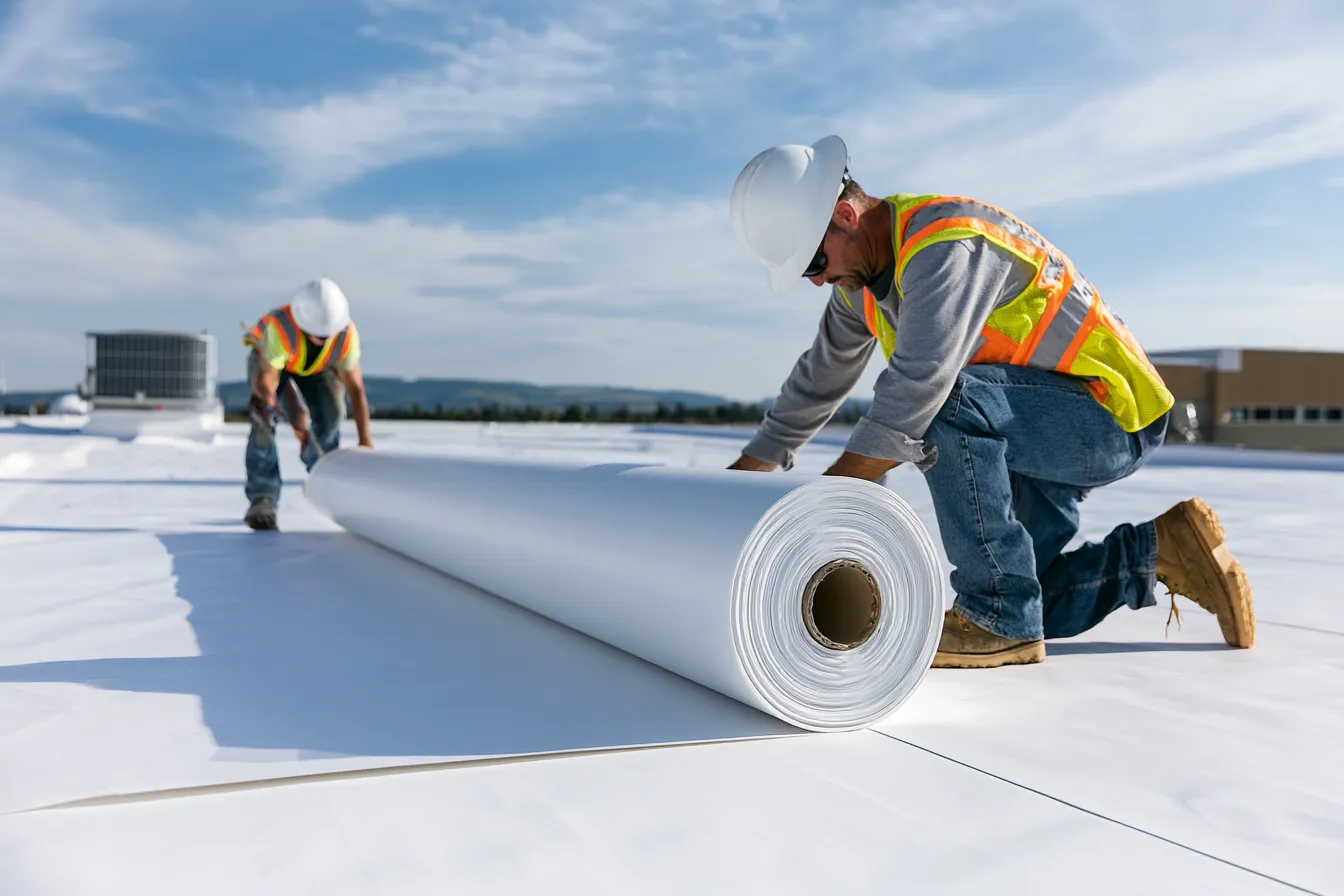
Seams are hot-air fused into one continuous sheet, stronger than tape or glue.
Flashings, warranty and walkthrough
Curbs, pipes and drains flashed by hand, then two separate warranty papers.
What a TPO roof looks like when it is in trouble
The work above covers a new install. On a membrane already up there, this is what a walk looks for.
Seams lifting or opening
Welded seams are the strongest part of a TPO roof, and the first place it leaks.
Punctures from foot traffic
Membranes are tough but not armored. Repeated trips to rooftop units put holes in them.
Blistering
A bubble means air or moisture trapped in the membrane. Different problem, gets opened up.
Flashing pulling away
Where the membrane turns up a wall or curb is the joint that moves most.
Water still standing
Ponding a day after rain means drainage is failing, and standing water shortens everything.
A dulled, dirty surface
Reflectivity fades as the surface picks up dirt. Cosmetic alone, functional alongside the rest.
How a TPO installation runs in Little Elm.
The assessment decides the specification. The specification is where an owner has choices to make.
Survey the existing roof
Deck condition, insulation moisture, drainage and the penetrations, recorded before anything is proposed.
Match thickness to use
Traffic, rooftop equipment and exposure decide membrane thickness and attachment method.
Weld the system down
Insulation down, membrane laid, seams hot-air welded, curbs and pipes flashed.
Walk it and sign off
A final walk of seams and details, then two warranties handed over.
TPO questions building owners ask
Including the comparison the sales sheets tend to skip. Thickness and attachment are where the money goes.
Get your Little Elm TPO roof priced
A commercial assessment is measured on the roof, not estimated from the parking lot: a plain read on whether TPO suits the building, and a written specification you can hold a bid against. The building's size and what is on the roof now are enough to start.
Roofing you can plan around