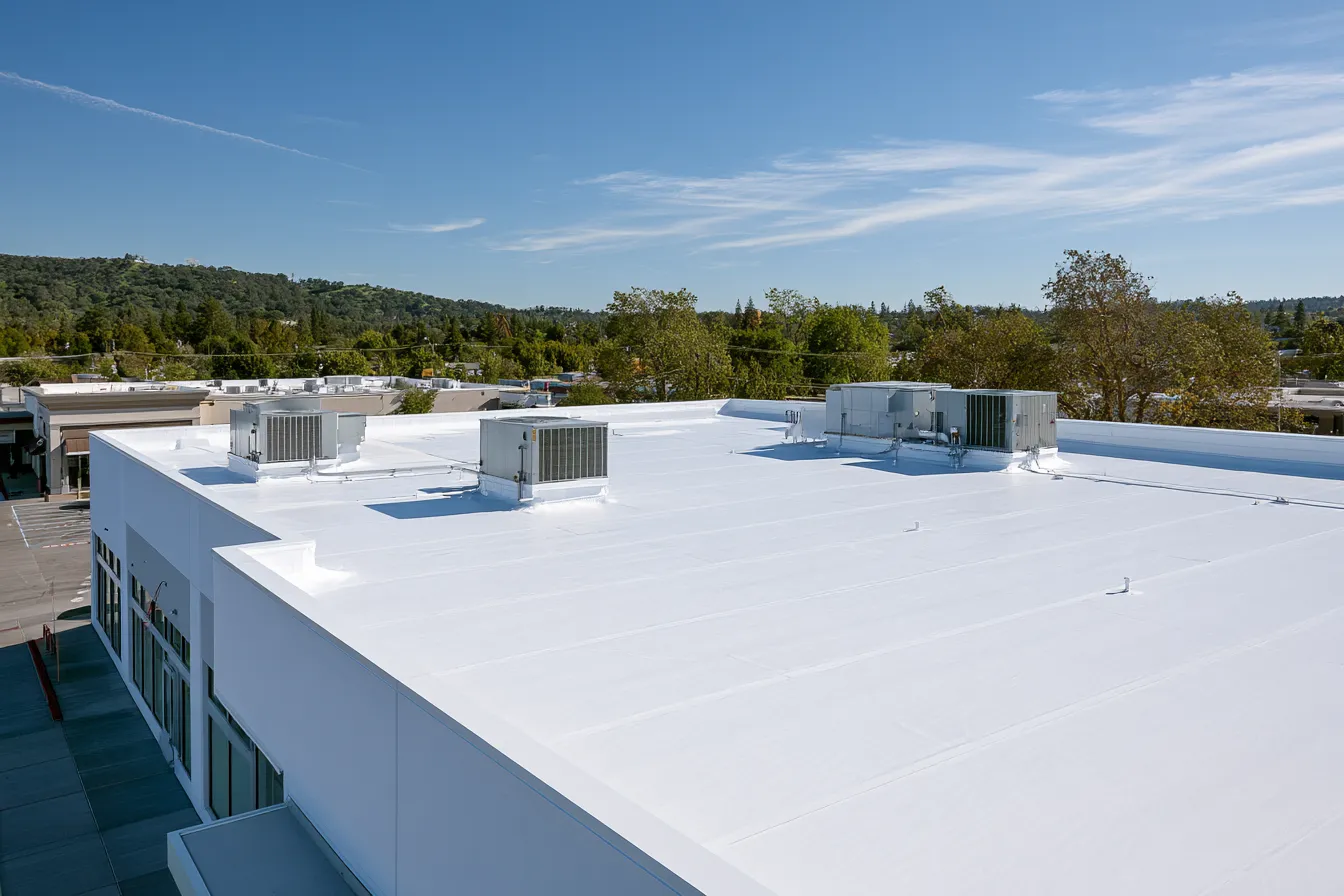
Commercial Roof Coating in Little Elm, TX
A coating buys years on a roof that qualifies and nothing on one that does not, so our roofers test it first.
Your building may not need a tear-off, just a new surface over what is there. A coating works only where the deck is dry.
Roofing you can plan around
What a coating job includes
Coating work is priced by the square foot and by how much preparation the existing surface needs, which is why the assessment comes first and the number second.
A coating is also the least disruptive option on a working building. Nothing comes off the roof, so there is no tear-off noise, no open deck and no dumpster cycling through the lot while tenants do business underneath. Here is what the work itself covers.
Moisture test first
Insulation tested for trapped water first. A roof that fails does not get coated.
Condition survey
Seams, flashings, penetrations and drainage walked and recorded before anything is proposed.
Repairs before coating
Open seams, failed flashings and punctures repaired first. A coating is not a fix.
Surface preparation
Cleaned and primed where the system requires, with an adhesion patch to confirm.
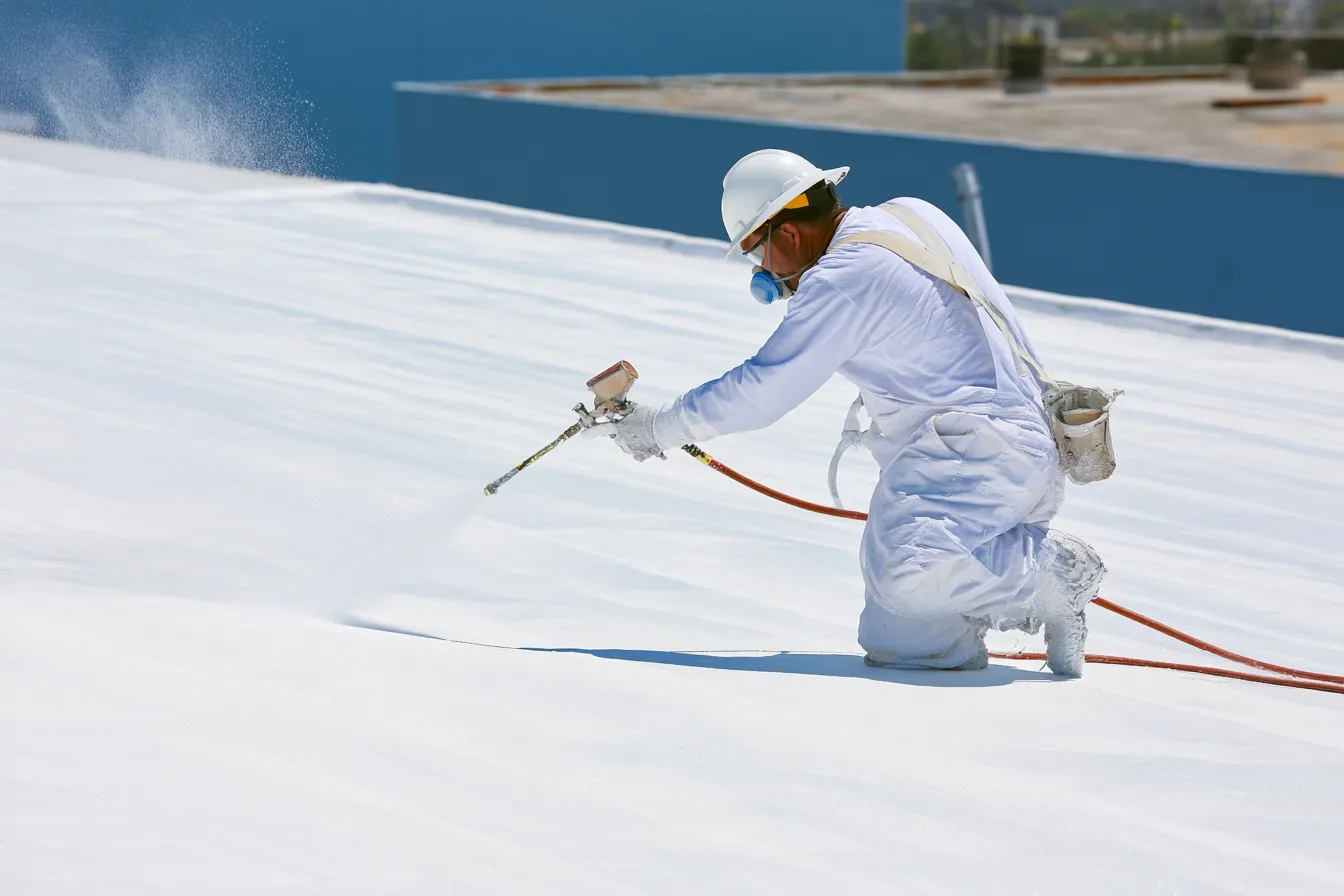
Coating application
Silicone or acrylic to the specified thickness, reinforced into seams and details.
Warranty documentation
Warranty terms come from the manufacturer’s program and the roofer’s workmanship terms.
Which roofs a coating suits
The first three describe a roof a coating will help. The last three describe a lost cause.
Sound deck, dry insulation
A dry moisture survey is the one condition that makes a coating legitimate.
Membrane mostly intact
Surface wear, chalking and UV aging with the membrane whole is what coatings renew.
Isolated, repairable details
A few failed seams are fine, if they are repaired before the coating goes on.
Wet insulation across the field
Saturated insulation does not dry under a coating. It keeps working on the deck.
Leaks that patching never stopped
A roof repaired repeatedly in different places is failing as a system.
A deck that is deteriorating
Soft spots, rotted decking or structural movement mean tear-off. A coating there is paint.
How a coating job runs in Little Elm.
The first step is a gate, not a formality. A roof that fails it does not get coated.
Moisture survey first
Insulation checked for trapped water, and an adhesion patch confirms a coating will bond.
Fix before you coat
Failed seams and flashings are rebuilt first. A coating renews only a surface.
Clean and prime
The roof is washed and primed where the system requires it. Coatings need a clean surface.
Coat to thickness
Silicone or acrylic to the specified thickness, the same figure the warranty names.
Roof coating questions about the roof underneath
Including the two a coating salesman would rather not be asked. Both are about the roof underneath.
Get your Little Elm roof tested for a coating
Little Elm Roofing Co arranges the moisture survey and the condition report, then a straight answer on whether a coating suits this roof or only postpones a replacement you already need. If a coating is wrong for the building we will say so.
Roofing you can plan around